


WEBINAR 1: PoCUS in Dengue
Dengue has become a global health threat and requires early diagnosis and meticulous fluid management. The use of ultrasound in Dengue management is a recent advancement and has significantly improved patient care. This webinar is about how the critical stage of Dengue is diagnosed and managed with PoCUS effectively and efficiently.
Learning outcomes:
1. Diagnosis of Dengue leaking in DHF
2. Volume resuscitation in Dengue
3. Detection of Dengue-related complications
- Click here to download the speaker's biography: Dr Mostafa Elshenawy
- Click here to download the moderator's biography: Dr Caroline Ewertsen
View the presentations below ....

WEBINAR 2: Obstetrics in low resources
This webinar will present our experience of commencing outreach Obstetric and Ultrasound teaching support in Fiji. We will discuss the current and planned model for ultrasound teaching to be established and embedded through the WFUMB Centre of Education Fiji and Fiji National University. Alongside formal education, we have commenced clinical ultrasound teaching at Colonial War Memorial Hospital with Obstetric clinicians. Current strategies and anticipated developments will be discussed. Case studies will be used to demonstrate the changes in clinical practice occurring.
Learning outcomes:
1. Understand one model that is occurring in outreach ultrasound teaching
2. Highlight the importance of incorporating clinical settings in ultrasound teaching
3. Gain an insight into what can be achieved with the addition of obstetric and gynae ultrasound in clinical care in low-resource settings.
- Click here to download the speakers' biographies: A/Prof Felicity Park and Dr Nitik Ram
- Click here to download the moderator's biography: Jo McCann
View the presentations below ....
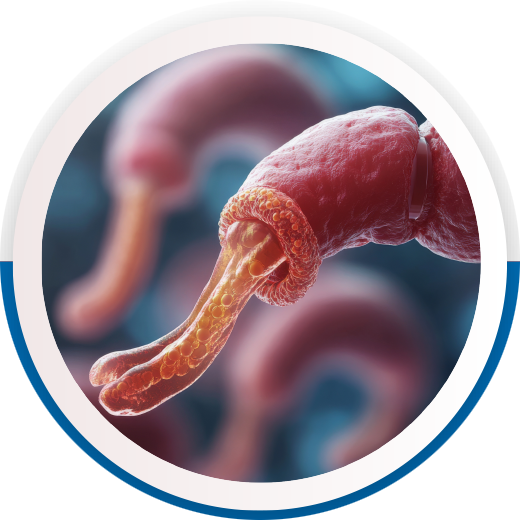
WEBINAR 3: Schistosomiasis with a focus on US-guided ablation
Schistosomiasis is a major public health challenge, especially in endemic areas, leading to significant hepatic and gastrointestinal morbidity.
Ultrasound is an important tool in diagnosing and staging hepatic schistosomiasis enabling early identification and management.
This webinar will provide an overview on the role of ultrasound in the diagnosis, staging, and management of hepatic schistosomiasis. Participants will explore
• the epidemiology and pathophysiology of schistosomiasis
• the role of ultrasound imaging in detecting hepatic involvement, including different grading systems
• Key sonographic features of hepatic schistosomiasis
Learning objectives:
- Understand the pathophysiology of hepatic schistosomiasis and how it leads to periportal fibrosis and portal hypertension
- Identify key ultrasound features of hepatic schistosomiasis
- Be familiar with the different ultrasound protocols for standardized assessment of hepatic schistosomiasis
- Click here to download the speaker's biography: Dr Abdulsemed Mohammed Nur
- COMING SOON - Moderator's biography: Nidhi Leekha
View the presentations below ....
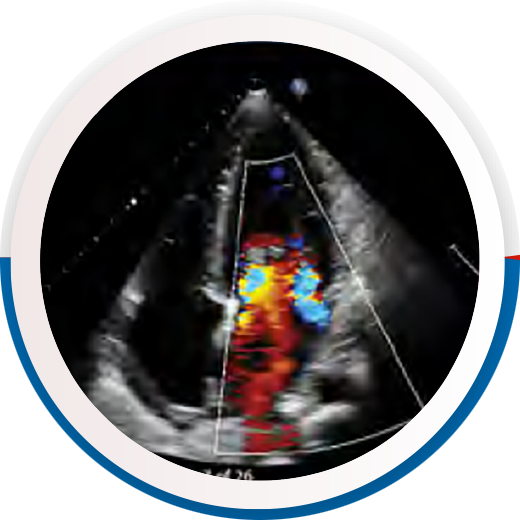
WEBINAR 4: Teaching Basic Critical Care Echocardiography in Low-Resource Settings: What is the Value?
The webinar will present core sonographic techniques and discuss training delivery models suited to resource-constrained settings, including approaches to supervision, skills retention, and integration into routine clinical care. Considerations around equipment availability, governance, and workforce capability will also be addressed.
Learning Objectives:
1. Outline common and important indications for basic critical care echocardiography in resource-limited settings.
2. Identify key components of a basic CCE training program suited to low-resource settings, including supervision models and assessment methods.
3. Recognise the operational and educational barriers to implementing CCE training, and discuss approaches to address them.
4. Review selected examples of how basic CCE has been incorporated into clinical practice in low-resource ICUs or emergency settings.
Speakers:
- Click here to download the speaker's biography - Dr Lewis McLean
- Click here to download the moderator's biography - Dr Priya Patel
View the presentations below ....
WEBINAR 5: Point of care echocardiography and rheumatic heart disease
Acute rheumatic fever (ARF) and rheumatic heart disease (RHD) remain prevalent in low and middle-income countries and some First Nations communities within high-income countries. RHD is associated with significant morbidity and premature death and is the leading cause of cardiovascular death in the young in many LMIC. The ongoing incidence of ARF is due to persisting socio-economic risk factors for Group A Strep infection, including poverty, overcrowding and poor hygiene infrastructure. Prevention of RHD relies on addressing these risk factors, early identification and treatment of GAS infection and ARF episodes and early detection of RHD. Early RHD, as detected by echocardiography, can be treated with long term antibiotics to prevent progression to severe disease. Point of care echocardiography and task-sharing echocardiography screening for RHD has enabled larger populations to be screened for RHD, particularly in resource constrained settings. The recently updated 2023 World Heart Federation guidelines for the echocardiographic diagnosis of RHD outlines a two-stage pathway that supports point of care echocardiography for screening of RHD in high-risk populations.
Learning Objectives:
- What are the diagnostic criteria for RHD on echocardiography.
- Who is the population most likely to benefit from echocardiography screening.
- What should be considered when implementing task-sharing echocardiography for RHD.
- What is the future of RHD echocardiography screening.
Speakers:
- Click here to download the speaker's biography - Dr James Marangou
- Click here to download the moderator's biography - Dr Casey Parker
View the presentations below ....
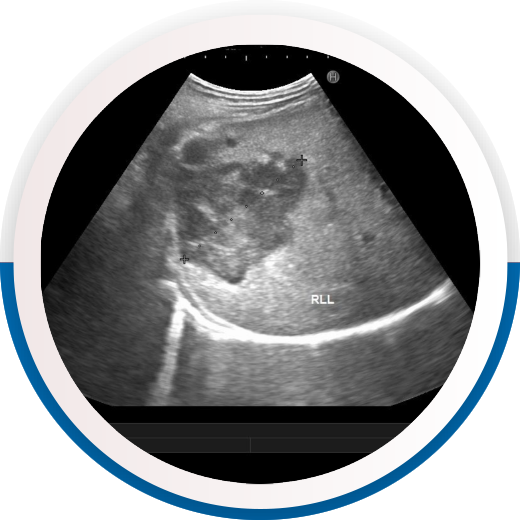
WEBINAR 6: Hepatocellular Carcinoma and US
Ultrasound is the backbone of Hepatocellular Carcinoma: Diagnosis & Management. Join dr Mostafa Elshenawy and Dr Caroline Ewertsen for another instalment in the WFUMB-ASUM Educational Series Webinar.
This webinar, presented by Dr Mostafa Elshenawy and moderated by Dr Caroline Ewertsen, will explore the pivotal role of ultrasound in the management of Hepatocellular Carcinoma (HCC), focusing on its use in diagnosis, surveillance, and treatment. Attendees will gain a comprehensive understanding of how ultrasound helps detect early-stage HCC in at-risk populations, monitors treatment outcomes, and guides interventions such as percutaneous ablation therapies. The advantages of contrast-enhanced ultrasound (CEUS) and ultrasound-guided procedures in providing accurate and real-time imaging for optimal patient management will be mentioned.
Learning Objectives:
- Understanding the HCC situation in Africa and the world.
- Understand the critical role of ultrasound in the early detection and screening of Hepatocellular Carcinoma (HCC).
- Learn the key ultrasound imaging features that distinguish HCC from benign liver lesions.
- Gain insights into the use of contrast-enhanced ultrasound (CEUS) in improving diagnostic accuracy for HCC.
- Discover the applications of ultrasound in guiding interventional treatments such as radiofrequency and microwave ablation for HCC.
- Explore the advantages of ultrasound for ongoing surveillance and monitoring of treatment response in HCC patients.
Speakers:
- Click here to download the speaker's biography: Dr Mostafa Elshenawy
- Click here to download the moderator's biography: Dr Caroline Ewertsen
View the presentations below ....
WEBINAR 7: Lower Limb Nerve Blocks
Register to hear Dr Luke Nottingham discuss lower limb nerve blocks. Complimentary attendance. This webinar is part of a monthly ASUM-WFUMB Educational Series of Webinars 2025.
Learning Objectives:
This webinar to hear from Dr Luke Nottingham, and learn more about:
- Sciatic nerve block (popliteal approach)
- Adductor canal block
- Femoral nerve block
- Fascia iliaca block (suprainguinal and infrainguinal approach)
Speakers:
- Click here to download the speaker's biography: Dr Luke Nottingham
- Click here to download the moderator's biography: Dr Nathan Peters
View the presentations below ....
WEBINAR 8: Echo in shock
30th October 2025
Professor Sam Orde will present the October webinar in this series. Echo can be extremely useful in critically ill patients with shock to help differentiate causes and guide management: from hypovoleamia to cardiogenic shock to obstructive causes. Pattern recognition is important and integrating echo findings with clinical scenario. Complimentary attendance.
Learning Objectives:
Join Professor Sam Orde for this webinar on Echo in shock, the learning outcomes will include:
- Recognising the different shock patterns: cardiogenic, hypovolaemic, distributive (sepsis), obstructive (PE, LVOT obstruction, tamponade)
- Integrating clinical and echo signs
- Tips for regional wall motion abnormality recognition
Speakers:
- Click here to download the speaker's biography: Professor Sam Orde
- Click here to download the moderator's biography: Dr Wai Chung Tse
WEBINAR 9: The importance of incorporating bowel ultrasound in the assessment of abdominal pain